Jan 6, 2026
Sustainability
2. Benefits of Ultrasonic Testing in Industrial Inspection
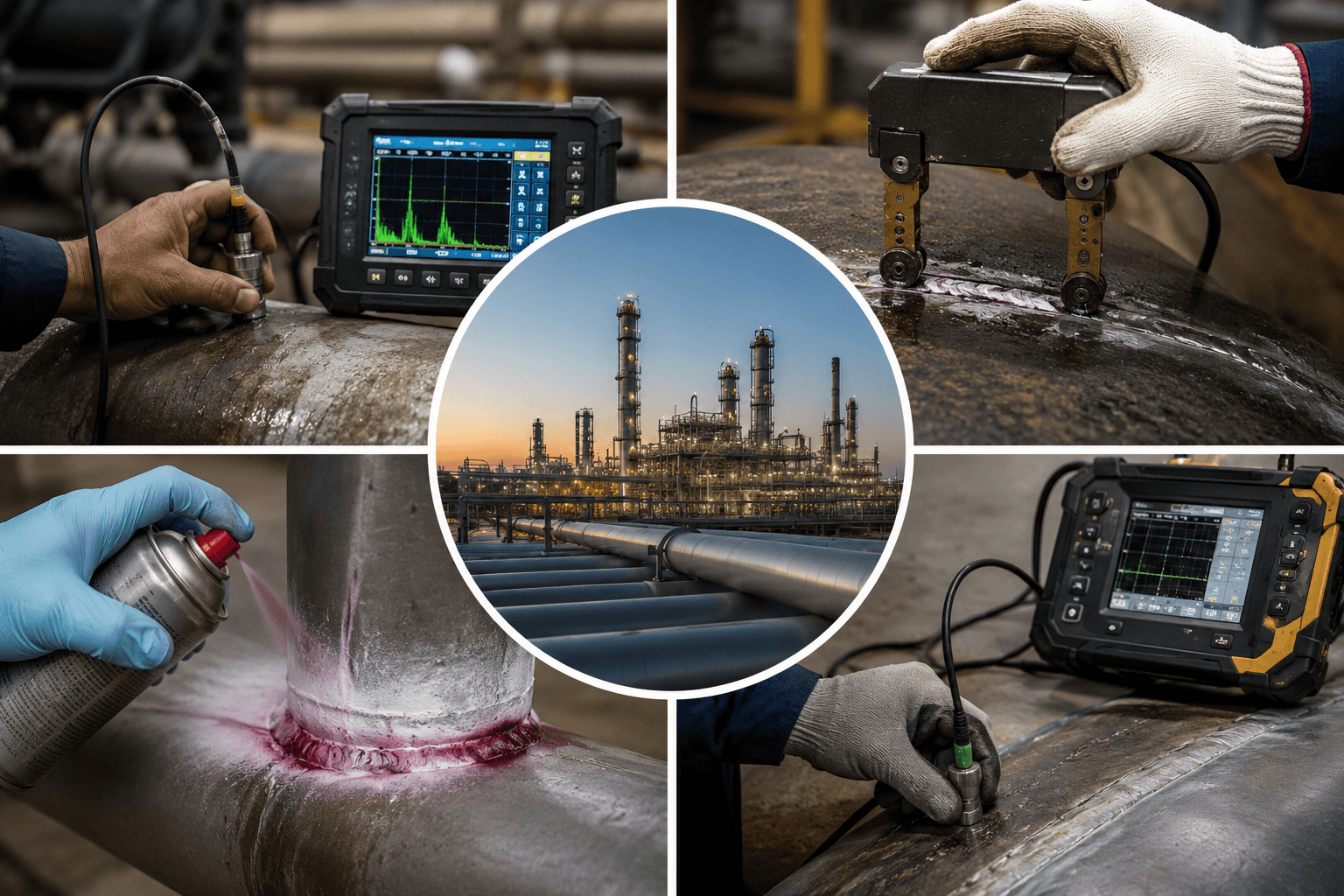
Ultrasonic Testing (UT) is one of the most reliable NDT methods used for detecting internal cracks, thickness loss, and hidden defects in metals and welded structures. It uses high-frequency sound waves to inspect materials with high accuracy. UT is widely used in pipelines, pressure vessels, fabrication industries, and heavy engineering projects because of its precision, speed, and cost-effectiveness.
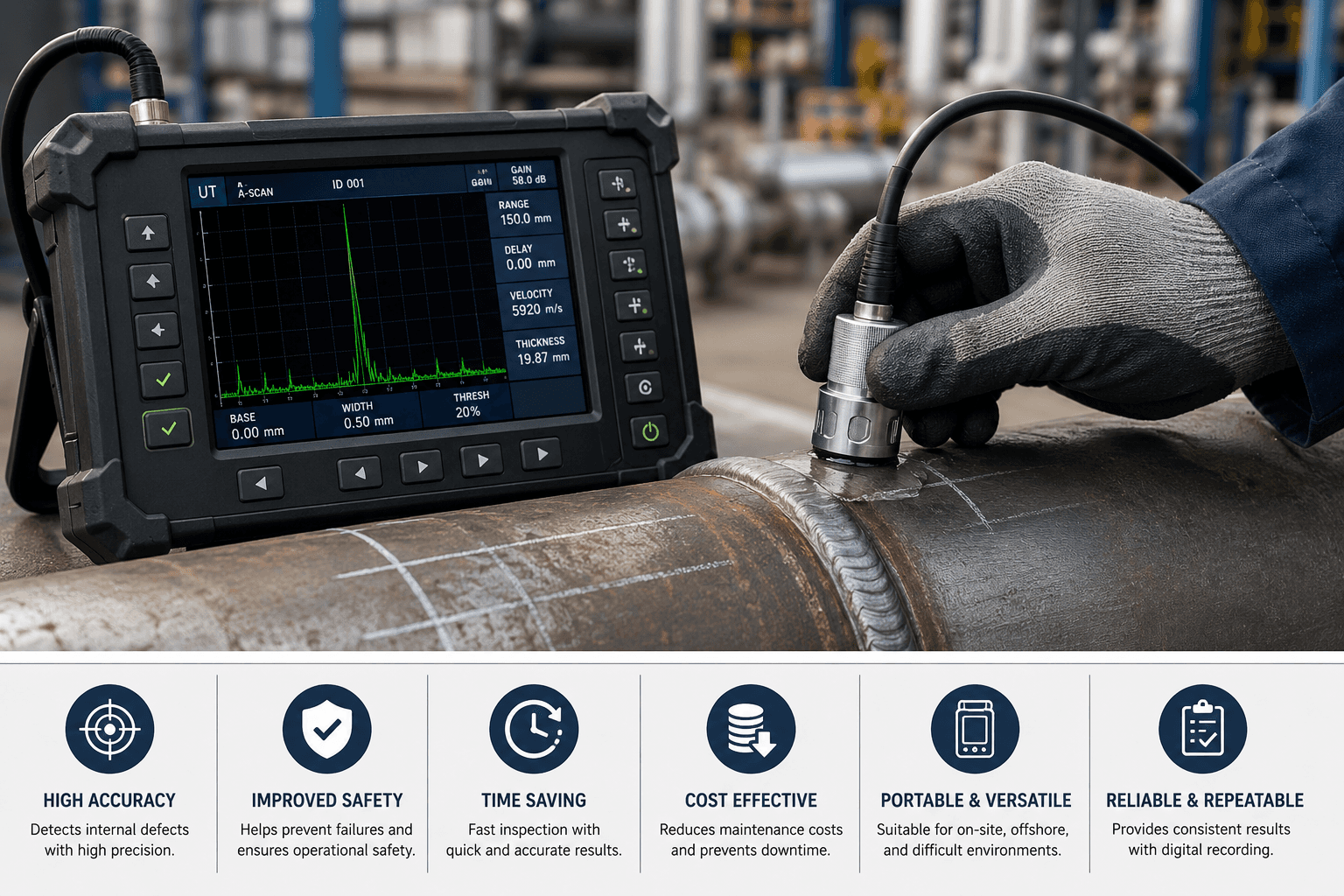
Ulasonic Testing (UT) is one of the most reliable and widely used Non-Destructive Testing methods in industrial inspection. It uses high-frequency sound waves to detect internal flaws, measure material thickness, and evaluate the integrity of components without causing any damage. UT is commonly used in industries such as Oil & Gas, Power Plants, Petrochemical, Construction, Manufacturing, and Heavy Engineering due to its accuracy, speed, and cost-effectiveness.
One of the major benefits of Ultrasonic Testing is its ability to identify deep internal defects that may not be visible from the surface. It can accurately detect cracks, corrosion, voids, and weld discontinuities in pipelines, pressure vessels, storage tanks, and structural components. UT provides highly sensitive inspection results, allowing industries to detect even very small defects before they become critical failures. This helps improve operational safety, reduce maintenance costs, and prevent unexpected shutdowns.
Another important advantage of Ultrasonic Testing is that it provides fast and precise inspection results while requiring access to only one side of the material in many applications. The method is portable, efficient, and suitable for both on-site and offshore inspections. Modern UT equipment also allows digital recording and real-time analysis, making inspection processes more reliable and easier to document. With its high accuracy, minimal downtime, and non-destructive nature, Ultrasonic Testing remains an essential solution for maintaining industrial quality, safety, and long-term equipment reliability.
our